CastPrep
Creator & Full-Stack AI Engineer
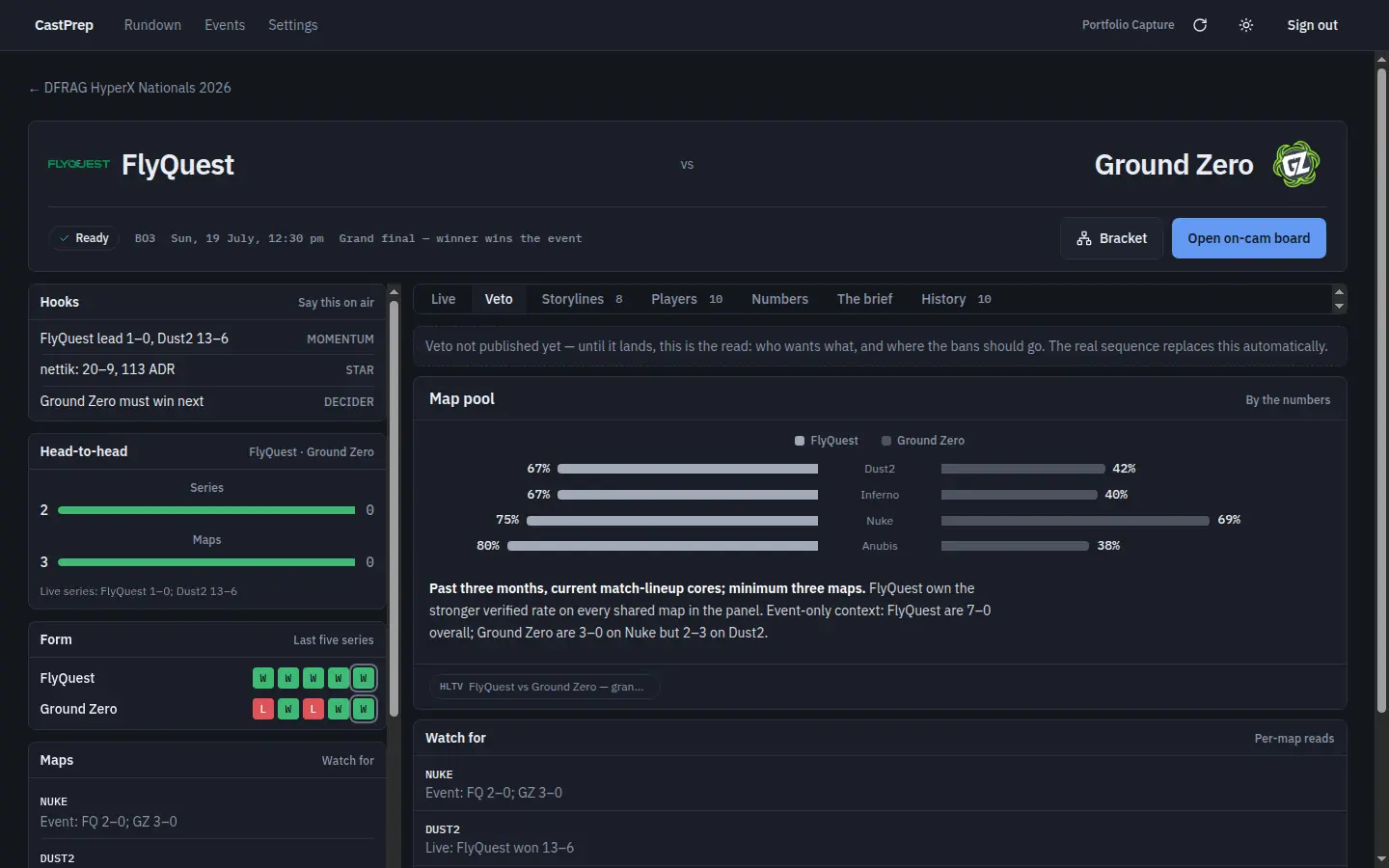
I built CastPrep for my own CS2 broadcasts. Its resumable research agents produce cited matchup packs and fail honestly when the evidence is incomplete.
Used in broadcast preparation
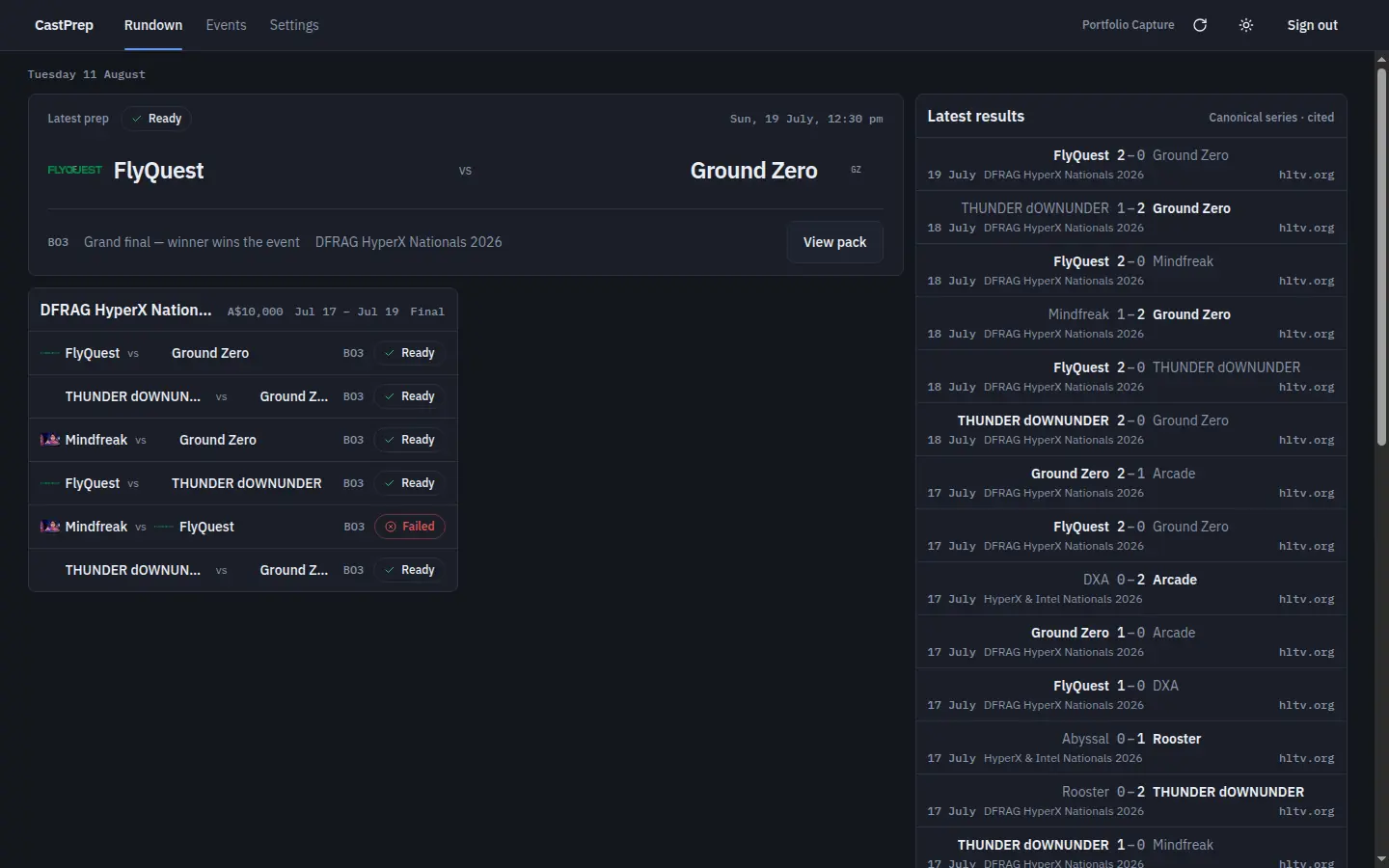
The rundown keeps the latest prepared broadcast, event matches and sourced result history in one operational view.
TypeScriptReactNext.jsPostgreSQLDrizzleBetter AuthCodexDocker
Context
Before a Counter-Strike broadcast, I was piecing together tournament history, team form, lineups and storylines from disconnected notes. CastPrep turns that research into one visual rundown that I can use on air.
My role
- Designed and built the product independently around my real broadcast preparation.
- Defined the research contract, source hierarchy, completion rules and presentation of progressively generated material.
- Built the authentication, persistence, agent execution and user interface as one integrated product.
- Strengthened the system when early runs exposed gaps between citation quantity, source quality and reliable historical conclusions.
What I built
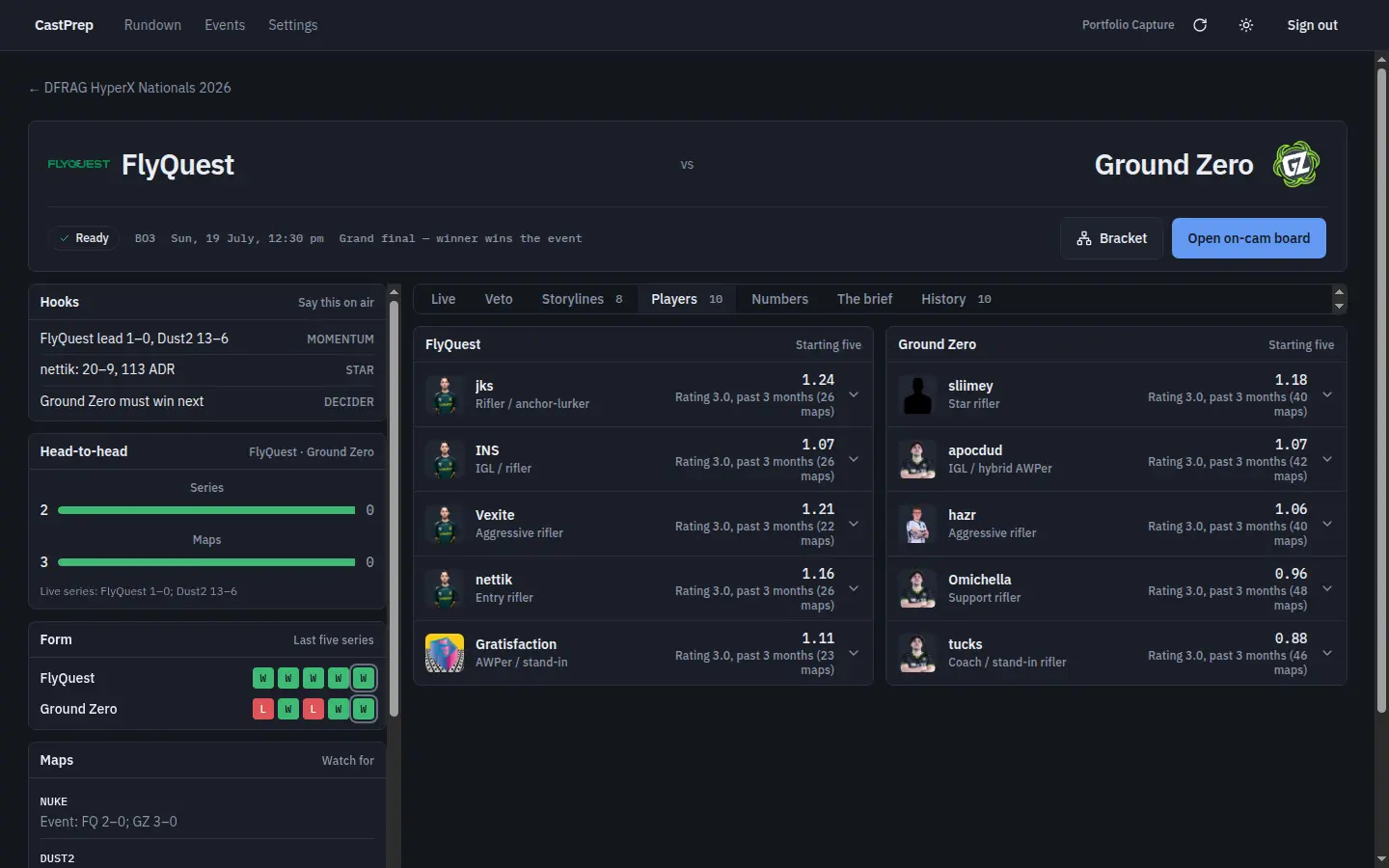
- Structured matchup and event research spanning tournament context, head-to-head history, recent form, complete lineups and player profiles.
- Long-running Codex research decoupled from request lifetimes, with persisted events and resumable server-sent streams.
- Progressive section persistence so useful research remains available even when a later stage fails.
- Completion gates requiring distinct five-versus-five starter coverage, with repair turns for incomplete or stale research.
- Canonical series and map results with direct source provenance and explicit fallback rules when preferred data is unavailable.
- Per-user authentication and isolated Codex account state with allowance-aware run controls.
How it works
- Next.js and Postgres application using Drizzle, Better Auth and a long-lived Codex app-server integration.
- Agent tools persist narrowly scoped sections and citations instead of treating a large model response as an indivisible document.
- Research runs continue on the same agent thread until explicit content requirements pass or the run fails honestly.
- Historical results are normalized and reused across later research while retaining source identity and provenance.
- Deployment design accounts for filesystem-backed per-user authentication and durable single-worker ownership.
Outcomes
- Turned my own preparation process into a repeatable product, not an AI demo looking for a use case.
- Produced broadcast-ready material that I used to prepare for Counter-Strike coverage.
- Made incomplete research, conflicting history and weak provenance visible product states instead of silently presenting them as success.